Augustii Architecture
A London-based architectural design practice
Projects
-
![]()
Masseria Sant Aniello
Puglia, Italy
-
![]()
Ayurveda Retreat Penukonda
India
-
![]()
Sloane Square
London
-
![]()
Cowshed
Puglia, Italy
-
![]()
The Glass House
London
-
![]()
Luna
Puglia, Italy
-
![]()
Sloane Square II
London
-
![]()
Borgo di Lama
Puglia, Italy
-
![]()
Hall Art Installation
Derneburg, Germany
-
![]()
Landscaping Giardini
Puglia, Italy
-
![]()
Hall Art Foundation Visitor Centre
Derneburg, Germany
-
![]()
Monopoli Town House
Puglia, Italy

Explore
Hall Art Foundation Visitor Centre
The Hall Art Foundation was established by collectors Andy and Christine Hall at Schloss Derneburg, a historic estate in Lower Saxony, Germany. One of Europe’s significant privately held collections of contemporary art, it occupies a group of historic buildings whose careful adaptation has been central to the Foundation’s identity from the outset.
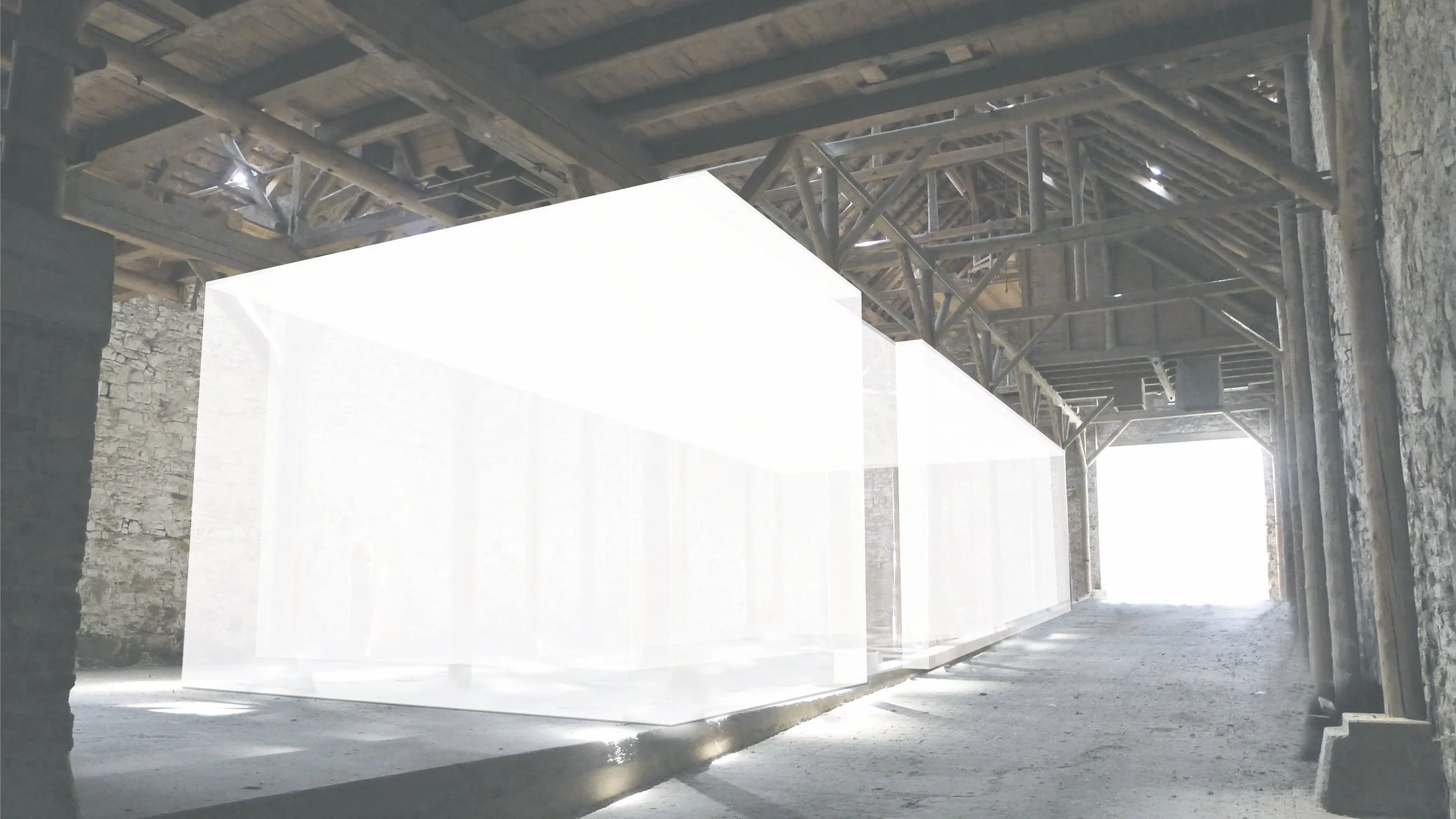
This listed 17th-century structure on the estate had reached the point of structural crisis. Rather than undertaking a conventional restoration, Augustii stripped it entirely: the first floor was removed, the fabric taken back to its bones, and the building reduced to a shell. The act of clearing was the first and most important design decision.
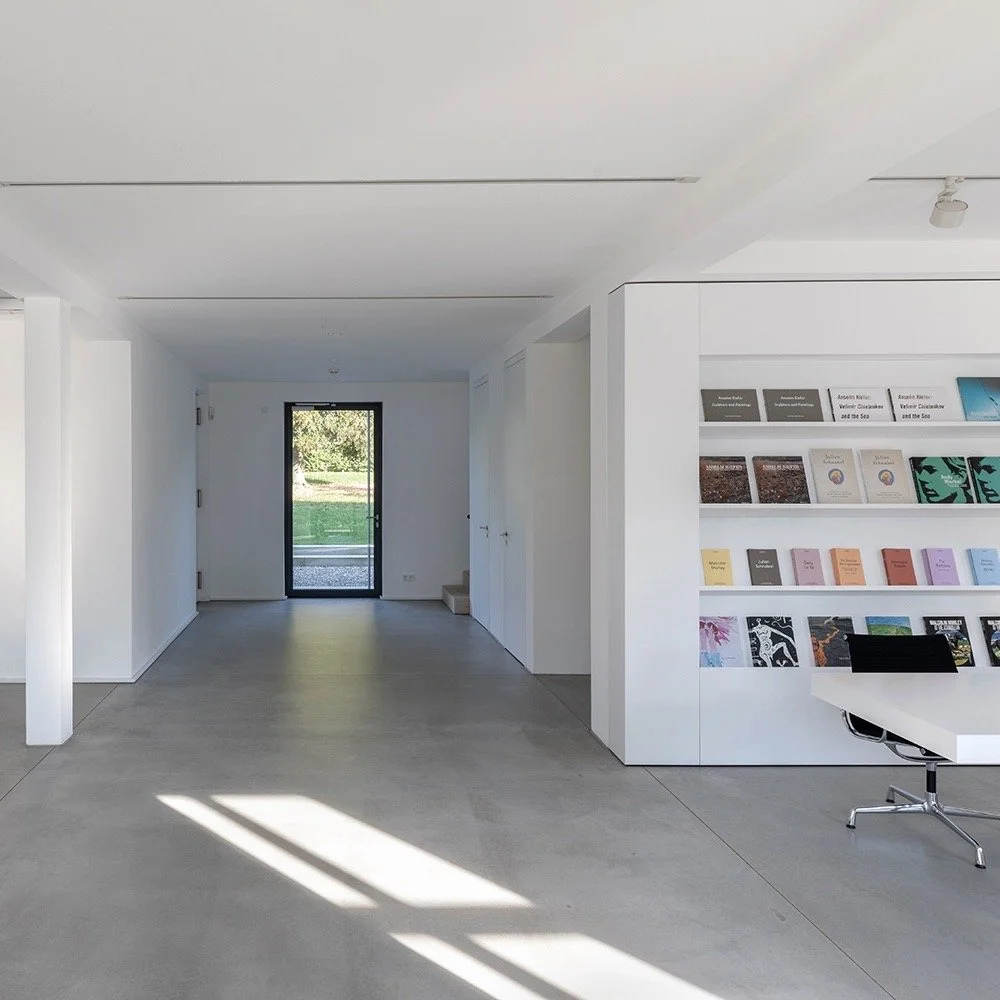
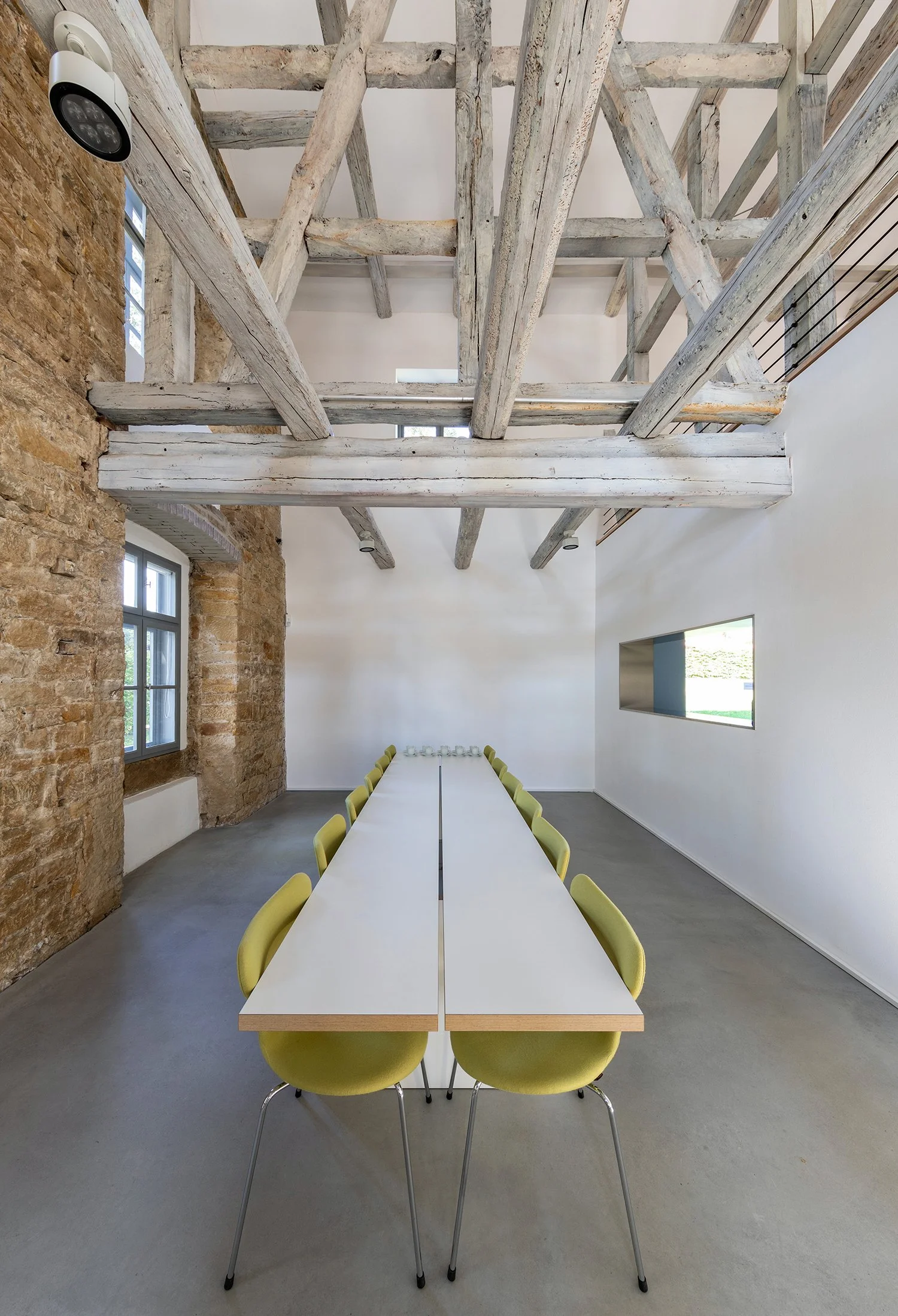
Into that shell, a new volume was inserted — a box of timber and concrete, precise and unambiguous in its contemporaneity, set within the body of the historic ruin. The insertion creates a new floor level where the old one stood, but makes no pretence of replicating what was lost. Old and new are held in deliberate, legible tension: the stripped historic walls read as what they are, the inserted volume reads as what it is, and the space between them — the gap, the reveal, the difference in material and in time — is where the architecture lives.
The building is complete and in use as the visitor reception for the Hall Art Foundation, providing flexible spaces for arrival, events, and art viewing. The approach reflects a principle at the heart of Augustii’s practice: to reveal the old rather than restore it — not to pretend the old is new, or the new is old, but to let both speak clearly, side by side.
Monopoli Town House
A house on four levels with a 20 m² footprint, built directly onto the Adriatic seafront in the historic centre of Monopoli, Puglia. Added to across the centuries, it had reached the point of near-collapse.
Augustii stripped it back, structurally reinforced it, and made it habitable again — with a proper staircase connecting a ground-floor studio to a two-storey apartment above, and a roof terrace at the top. The intervention was minimal by necessity and by instinct.
It is tiny. The view is vast — an endless horizon, and not much else but the sound of the sea and fishing boats.

Masseria Sant'Aniello
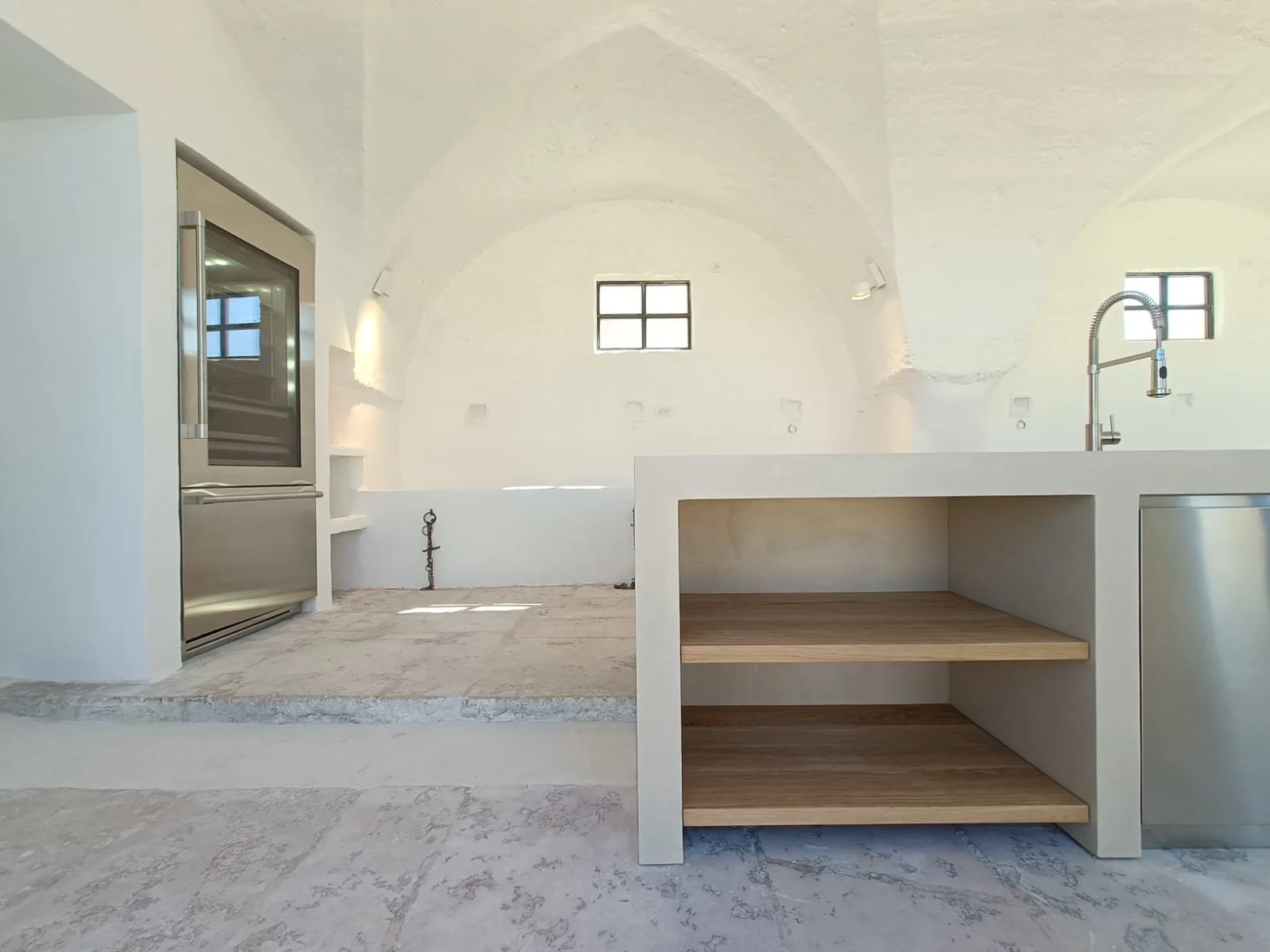
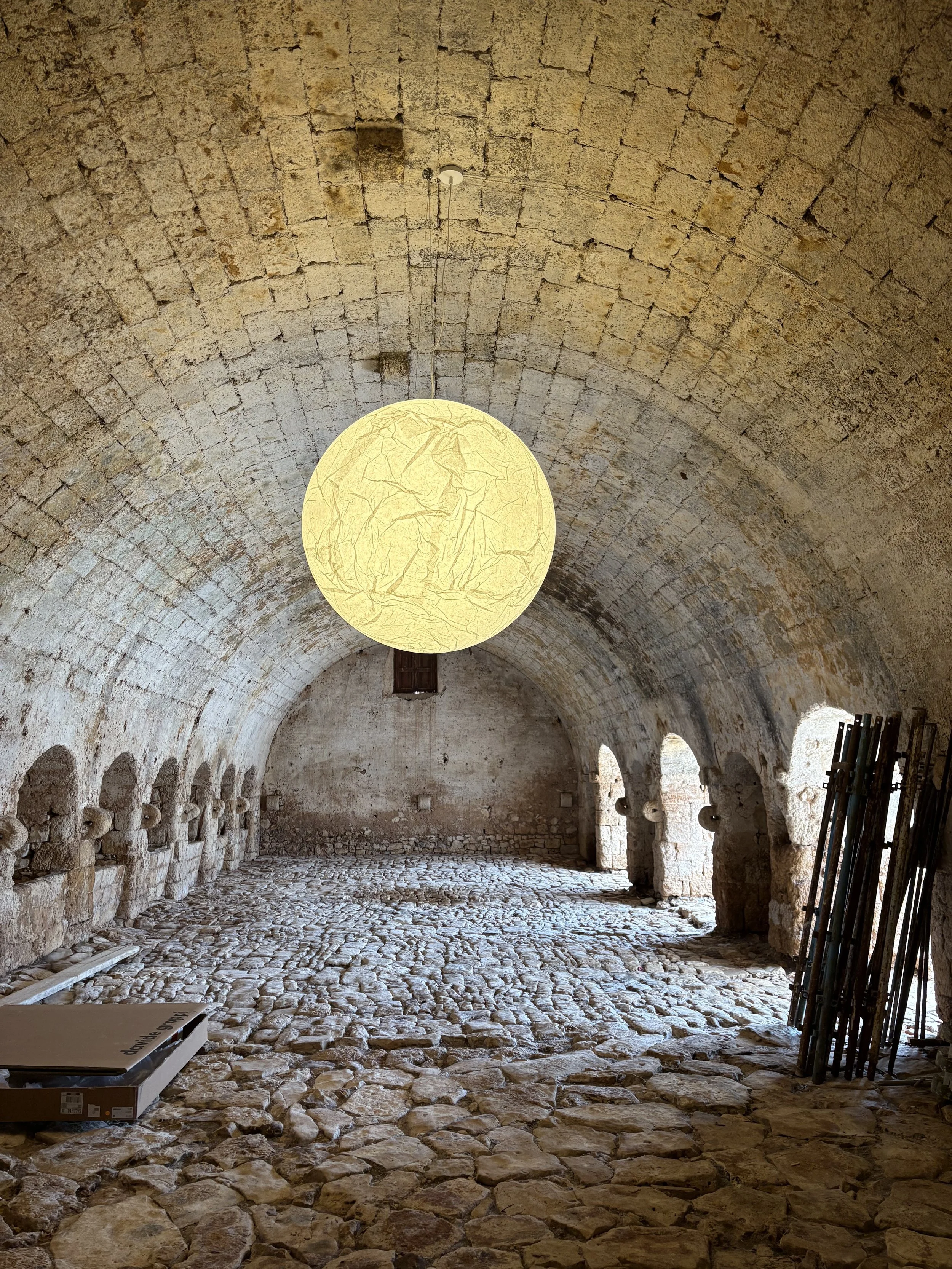
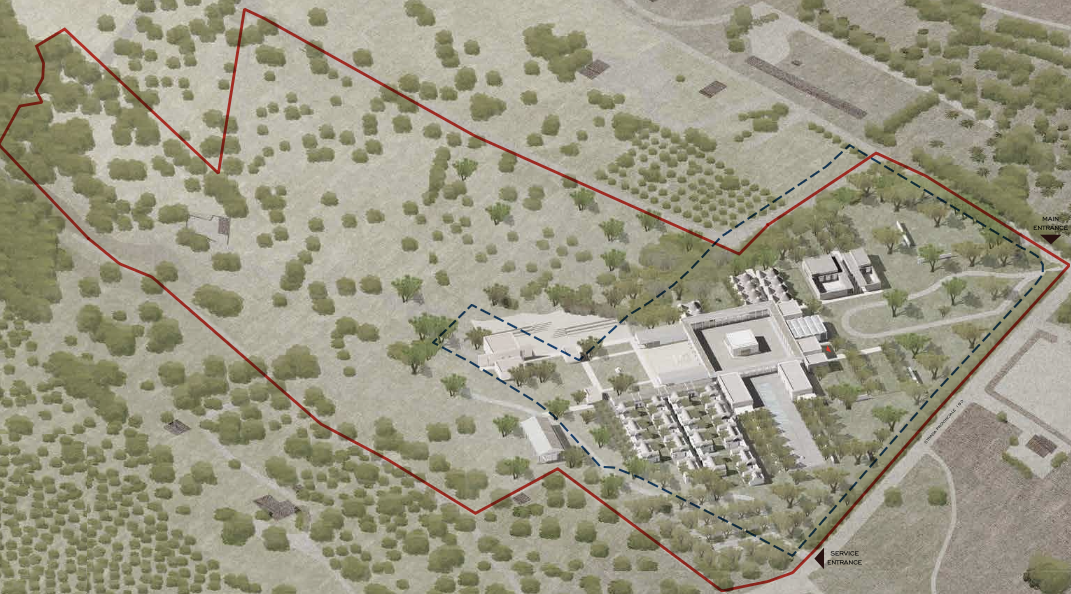
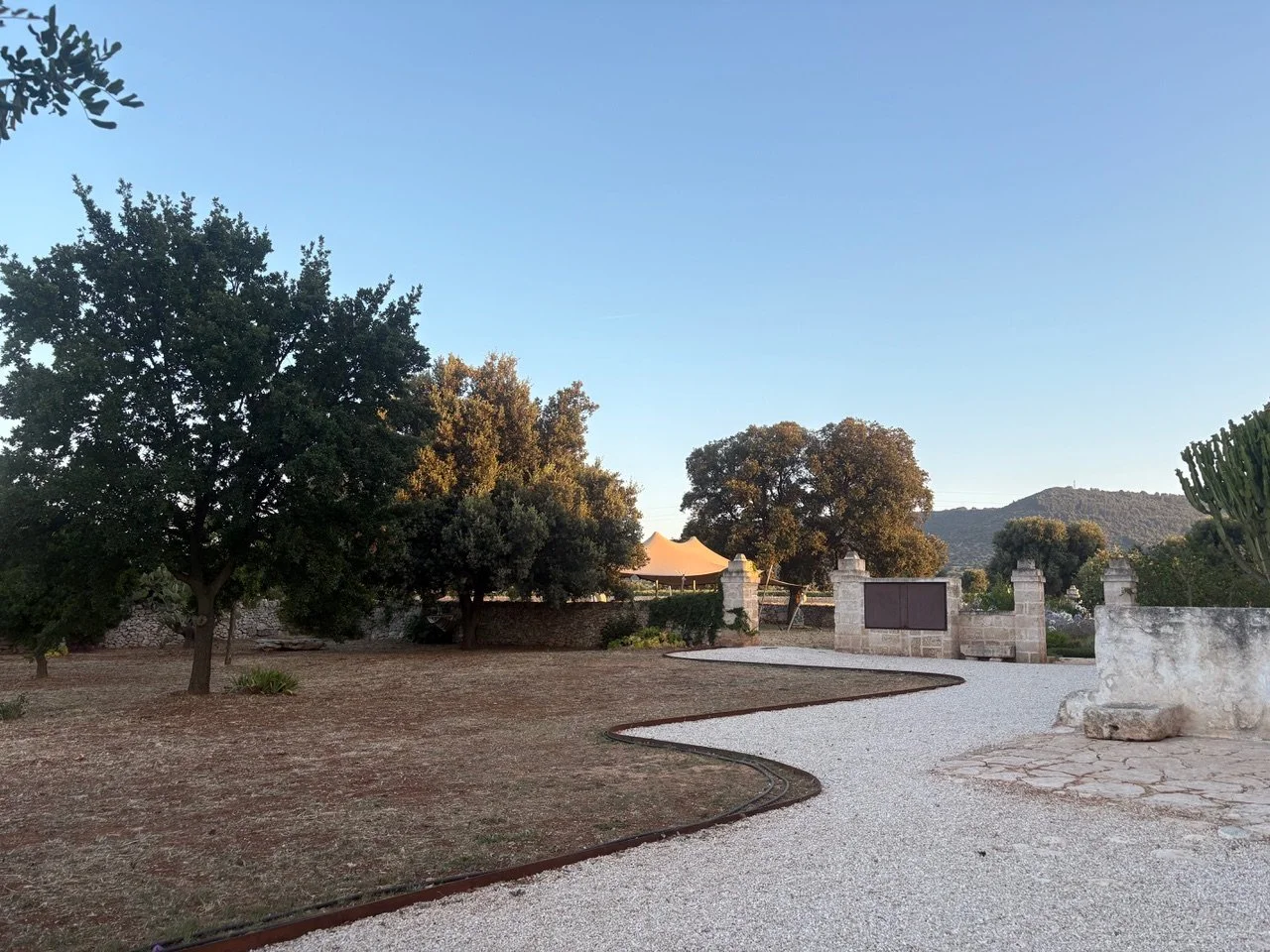
Masseria Sant’Aniello is a fortified farmhouse with origins in the 13th century, built under the Order of Malta. It sits in the Puglian countryside surrounded by ancient olive trees, facing the Mediterranean to the east and the mountains to the west.
The masseria comprises approximately 2,000 m² of built fabric: thick stone walls, cross-vaulted ceilings, a ground floor that once served as food depot and stabling, and a primary floor above. Each space carries a different character — a consequence of the building’s protective, additive logic over centuries.
The architecture is, at its core, a climate machine. Summer temperatures in this part of Puglia regularly exceed 40°C, yet the masseria requires no mechanical cooling. The mass of the walls — some over a metre thick — absorbs heat through the day and releases it slowly through the night. Cross vaults channel air through the interior; deep reveals shade the openings; organic materials breathe. The project has maintained this principle throughout, working entirely without air conditioning and using only natural materials. The building stays cool because it was always designed to.
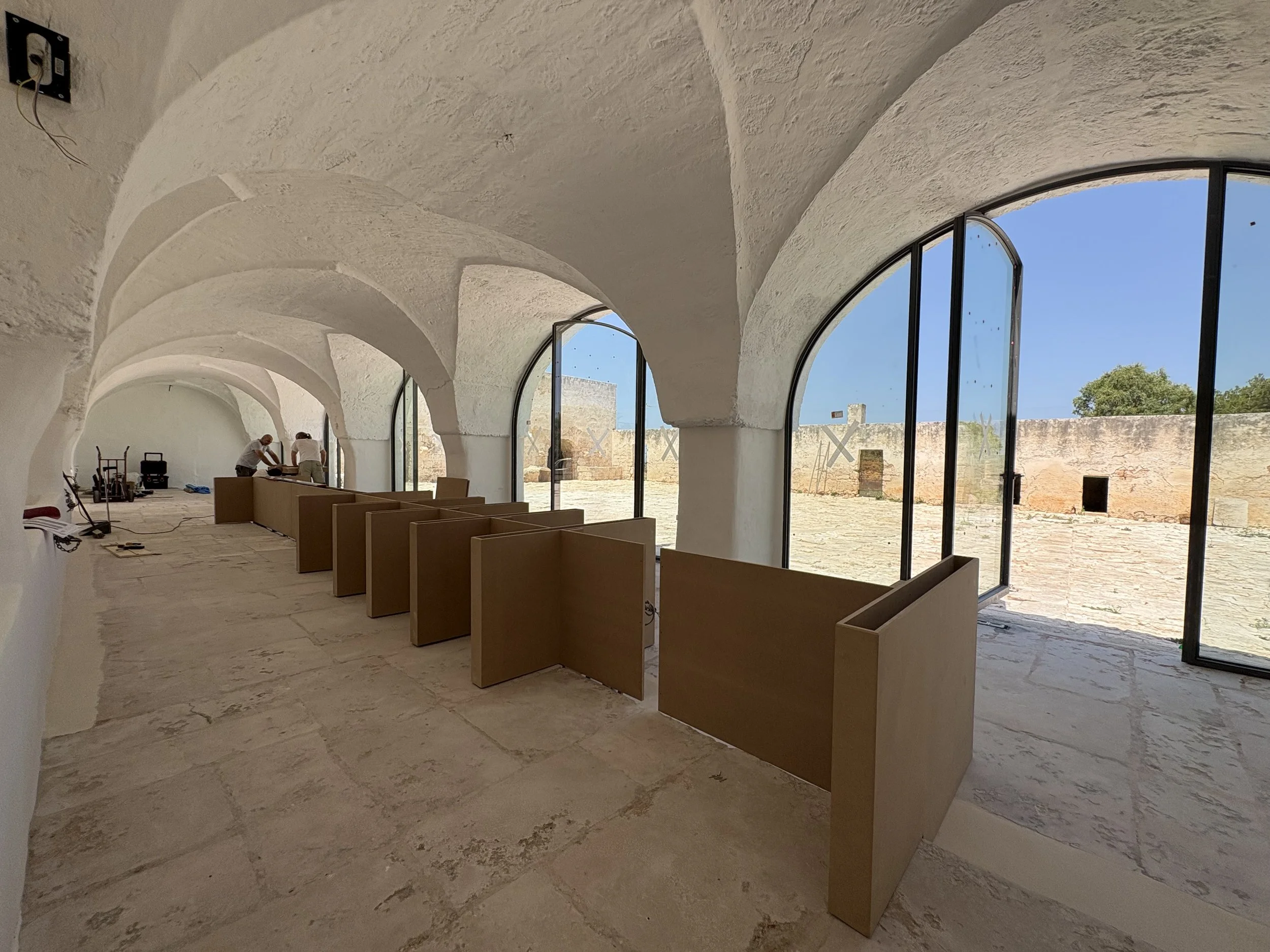
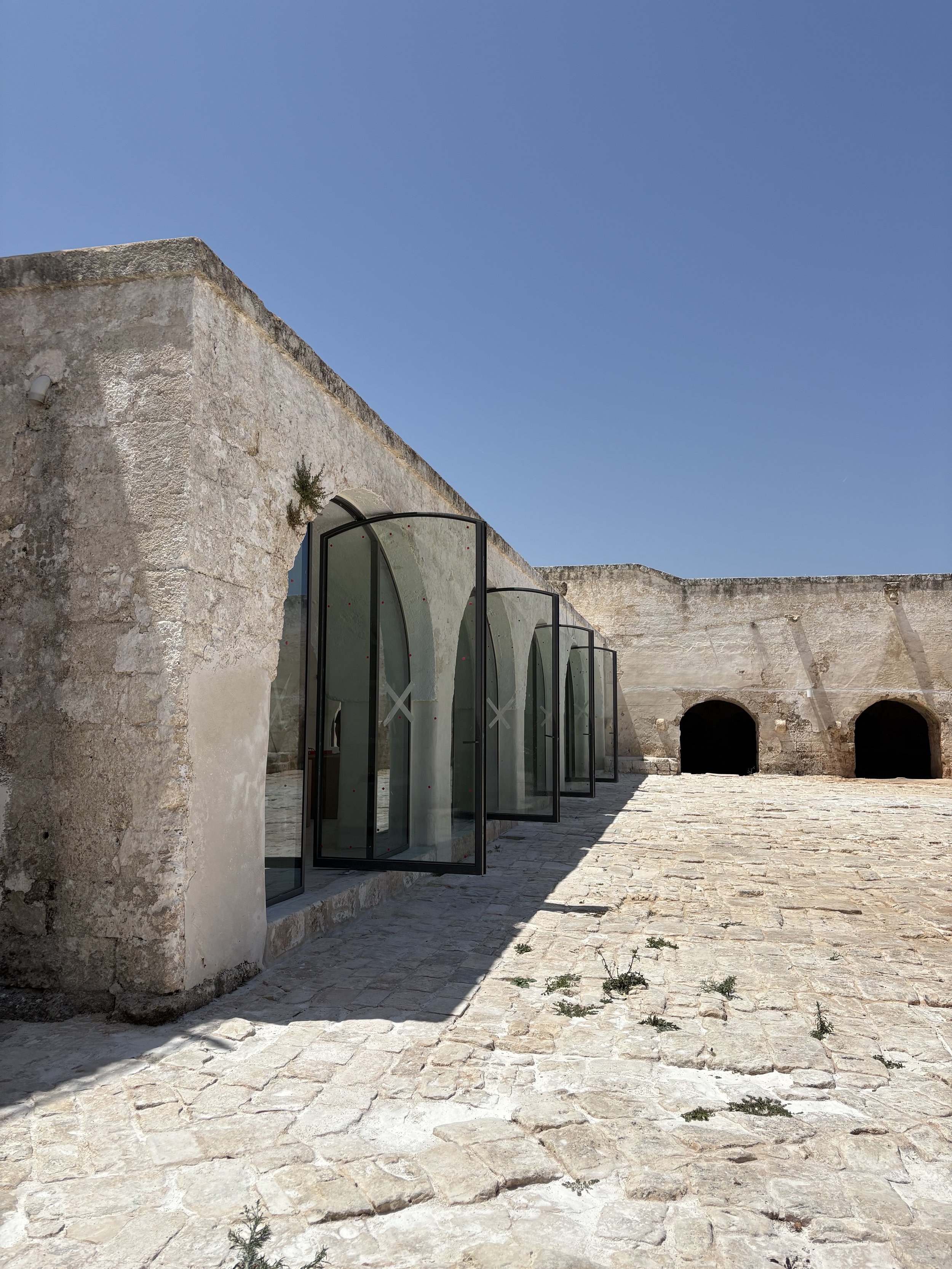
The spa and pool complex occupies what was formerly the chicken run: a linear agricultural building of around 28 metres, structured by a sequence of six individual cross vaults. The architecture suggested its own programme. Each vault becomes a room in the spa sequence — a progression from arrival through treatment to water — the cellular rhythm of the old farm building reinterpreted as a logic of ritual and rest. The complex opens into a new garden of exotic planting and ancient stone courtyards, where the boundary between inside and outside dissolves.
The gardens are conceived as a progression — a series of distinct worlds moving from the deeply historic to the newly wild. Closest to the masseria is the agrumeto: a classical citrus garden of exceptional beauty and integrity, enclosed within high walls and planted with a formal symmetry of orange, mandarin and lemon trees, fragrant and largely unchanged. Beyond it, a scented herb garden, then an orchard, then a kitchen garden — a farm-to-table sequence that connects the house to the land it was always built to work. At the furthest point from the house, surrounding the spa, a new exotic garden: lush, tropical in character, private and sensory — a deliberate counterpoint to the austerity of the stone.
Contact
To discuss a project, please get in touch.
Augustii Architecture
Bartok House
Lansdowne Walk
London W11 3LT
Phone: +44 (0) 7817144780
Email: studio@augustii.net
About
Augustii Architecture is a London-based practice founded by Julia Augustii, working with private clients across the UK and Europe.
Julia trained at the Architectural Association and worked at Zaha Hadid Architects on projects including the MAXXI National Museum of 21st Century Arts in Rome and the Rosenthal Center for Contemporary Art in Cincinnati — buildings that shaped her understanding of how architecture inhabits space, light and time.
The practice works primarily within historic structures: masserias, townhouses, listed buildings, agricultural conversions. The approach is subtractive as much as additive — uncovering the logic of existing fabric, and designing from that logic rather than against it. The instinct is always to reveal the existing rather than to restore it — not to pretend the old is new, or the new is old, but to let both speak clearly, side by side. New interventions are precise, considered, and unapologetically of their moment.
Projects range from a 13th-century fortified farmhouse in Puglia to contemporary London interiors, an ayurvedic retreat in India, and a visitor centre for the Hall Art Foundation in Germany.
Services
Architectural Design
Historic Building Conversion
Residential & Cultural
Locations
Italy
India
Germany
United Kingdom
Process
Research & Narrative Development
Concept Design & Planning
Detail Design & On-Site Delivery
Approach
Context-driven, site-specific design
Sensitive integration of old and new
Expressive, sculptural spatial planning